Introduction
Overview
Kerry Group is a global leader in ingredients and food technologies, helping enhance the taste, nutrition, and functionality of food and beverage products.
To strengthen customer relationships and empower the sales team, Kerry launched Customer 360 Sales (C360 Sales) – a Salesforce-based platform that gives Sales employees a complete, integrated view of their customers, supporting smarter sales and stronger customer engagement.
The project kicked off in September 2022 with the goal of designing and building a prototype, which successfully evolved into an MVP in Q1 2023. Following its launch, development continued with the addition of new features identified during early research. A major review and enhancement phase took place in Q1 2024, ensuring the platform kept pace with evolving business needs.
By the time of my departure from Kerry in July 2025, the initiative was still progressing, with ongoing improvements driving even greater value for the business and its customers.
My Role
Collaborating closely with Salesforce’s UX Director (Fatos Berisha), a Salesforce UX designer, Kerry’s UX researcher, Salesforce developers, and the Product Owner, I played a key role in shaping the tool’s design. My contributions spanned wire-framing, prototyping, and testing, as well as driving iterative improvements. I also led additional rounds of prototyping, user engagement, and hands-on user testing to ensure the solution evolved in line with real customer needs.
Project background
Customer 360 Sales is a Salesforce-based tool that unifies key data sources into a single, shared customer view. By giving sales teams easy access to the insights they need, it empowers them to work smarter and deliver a stronger, more personalised customer experience.
Objective
The project set out to create a Sales dashboard that delivered a true 360-degree view of customers by integrating all key internal data systems.
The ambition was to:
- Build on the foundations of C360 Customer Care and Kerry PrediX
- Bring together critical data – sales history, recent customer interactions, and opportunity pipeline – into a single source of truth
- Provide one central view of customer and order information
- Empower sales teams with upfront insights to shift from reactive to proactive engagement
- Surface proactive prompts to address potential service issues before they arise
To achieve this vision, the project was structured into three key phases:
- Discover – interviewing a diverse range of stakeholders, including sales representatives and account managers, to uncover needs and pain points
- Define – creating personas, mapping jobs-to-be-done (job stories), and designing the future-state experiences needed to support them
- Design – prototyping new features, testing them with users, and refining the experience based on feedback
Research goals and methods
The high-level research goal was to understand user behaviour and map it to the customer journey through interviews, contextual inquiry, and secondary research. This work focused on defining key job stories that would shape the design direction.
Research goals included:
- Uncovering user needs and expectations
- Capturing business requirements
- Identifying pain points across the sales process
- Coding and analysing research data to surface insights
- Synthesising findings into clear, actionable job stories
Research methods included:
- User interviews – 11 participants from across the organisation
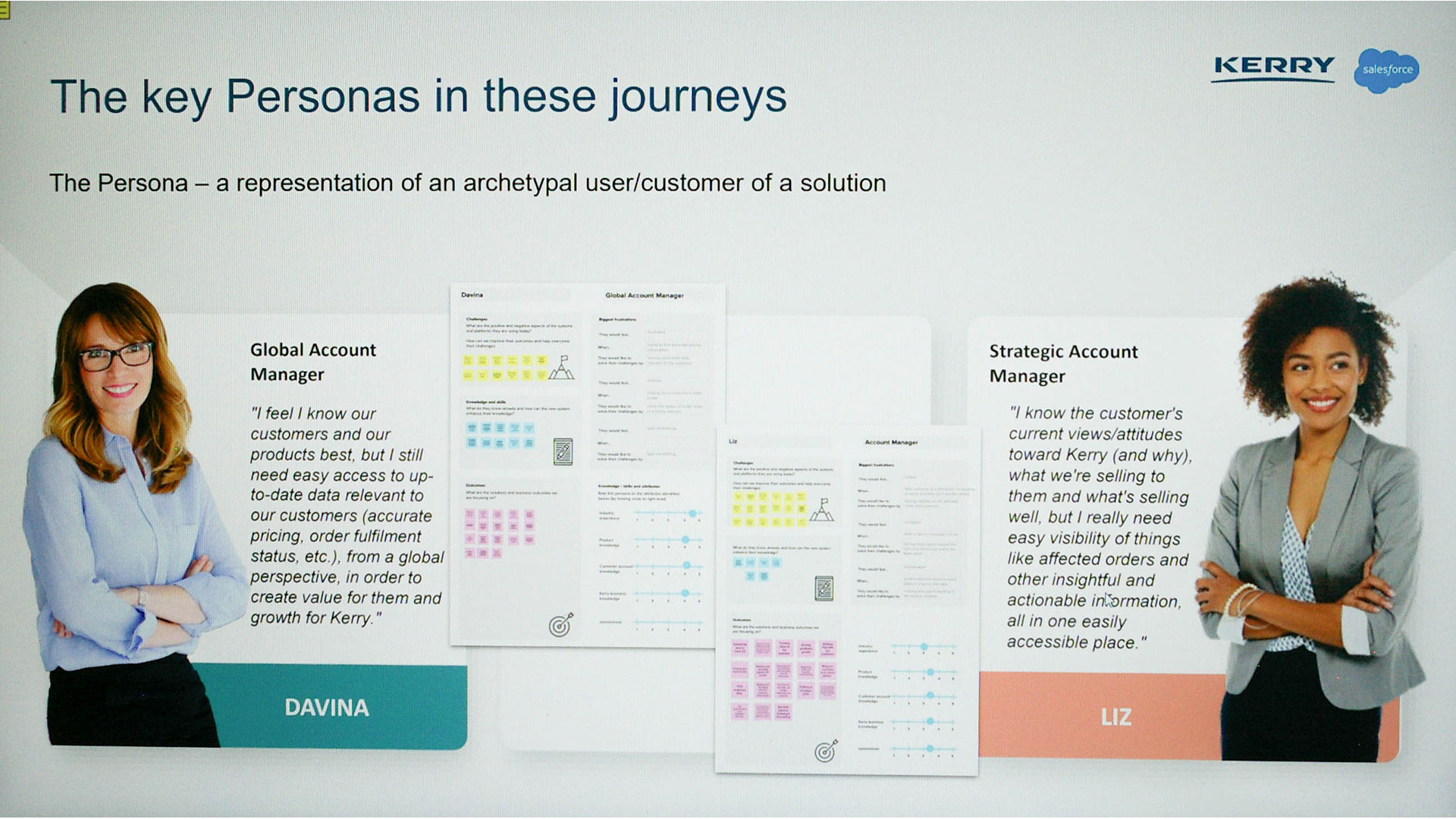
- Persona development – 2 core personas created
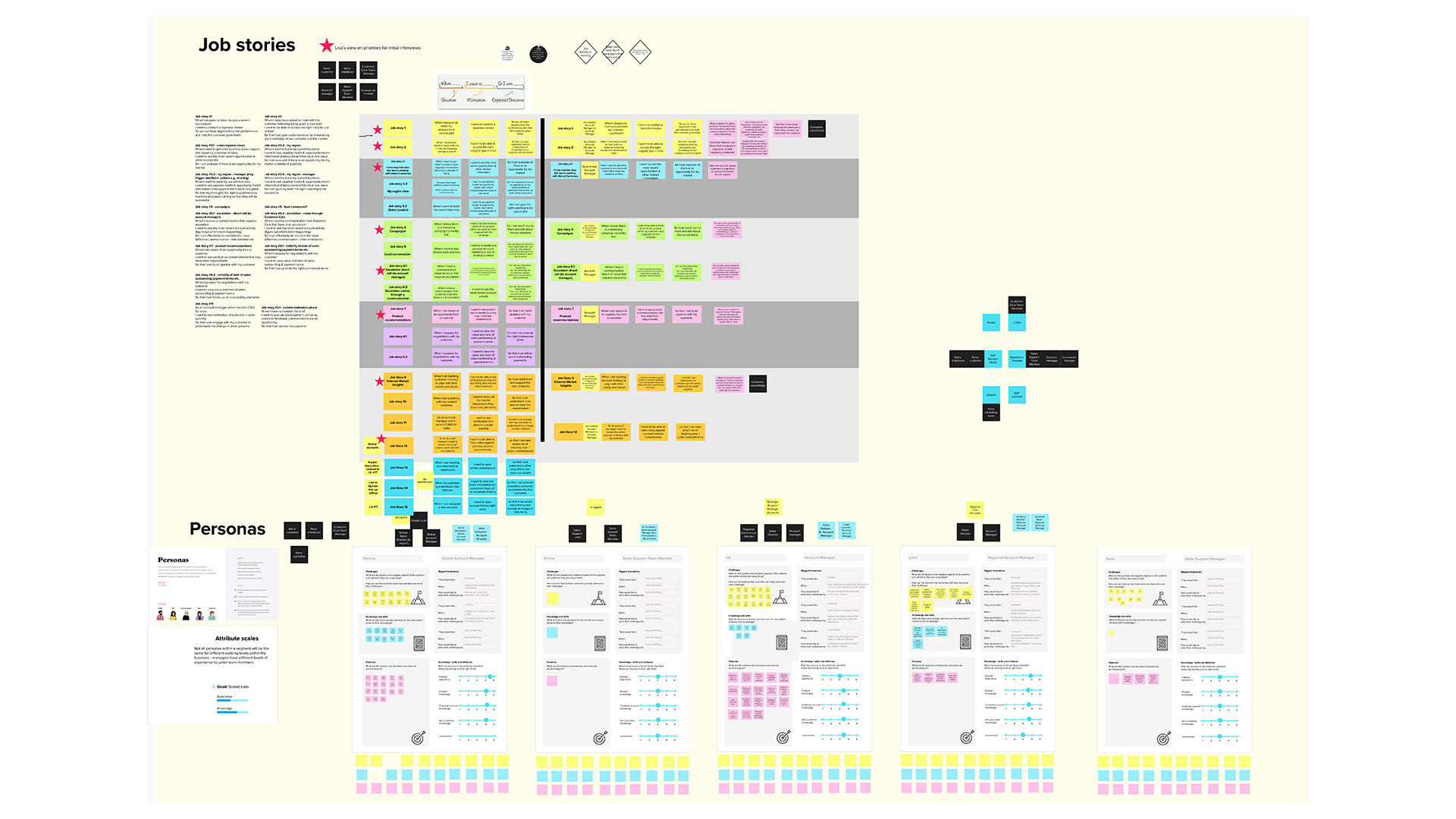
- Job story development – 9 job stories defined
- Customer journey mapping – aligning job stories to end-to-end experiences
Problem identification – key insights from research
Research uncovered several key challenges:
- Data was scattered across multiple systems, hard to locate, and inconsistently presented
- Users often felt overwhelmed by the sheer volume of information, highlighting a need for simplification
- Some data sources remained offline, siloed, and prone to becoming outdated
- There was no single, unified way of working
From these challenges, we surfaced critical insights:
- Data and content must be complete, consistent, and accessible in one place
- Account managers want ownership of outcomes and accountability for success
- Deep customer knowledge leads to stronger relationships and better results
- Visibility into systems and processes is essential, freeing Sales to focus on selling
- Context matters – seeing the current state of an account alongside trending data provides richer insights
- The sales team is highly motivated by service, customer experience, and driving sales impact
These insights directly shaped the customer journey maps and job stories that guided the design process.
Persona development
After the Define stage, we created two personas that became the foundation for developing job stories and shaping the customer journey maps. To ensure authenticity, sales employees and subject matter experts were actively involved in the persona definition process, helping us ground the personas in real-world behaviours and needs.
Personas
Customer journey map, job stories
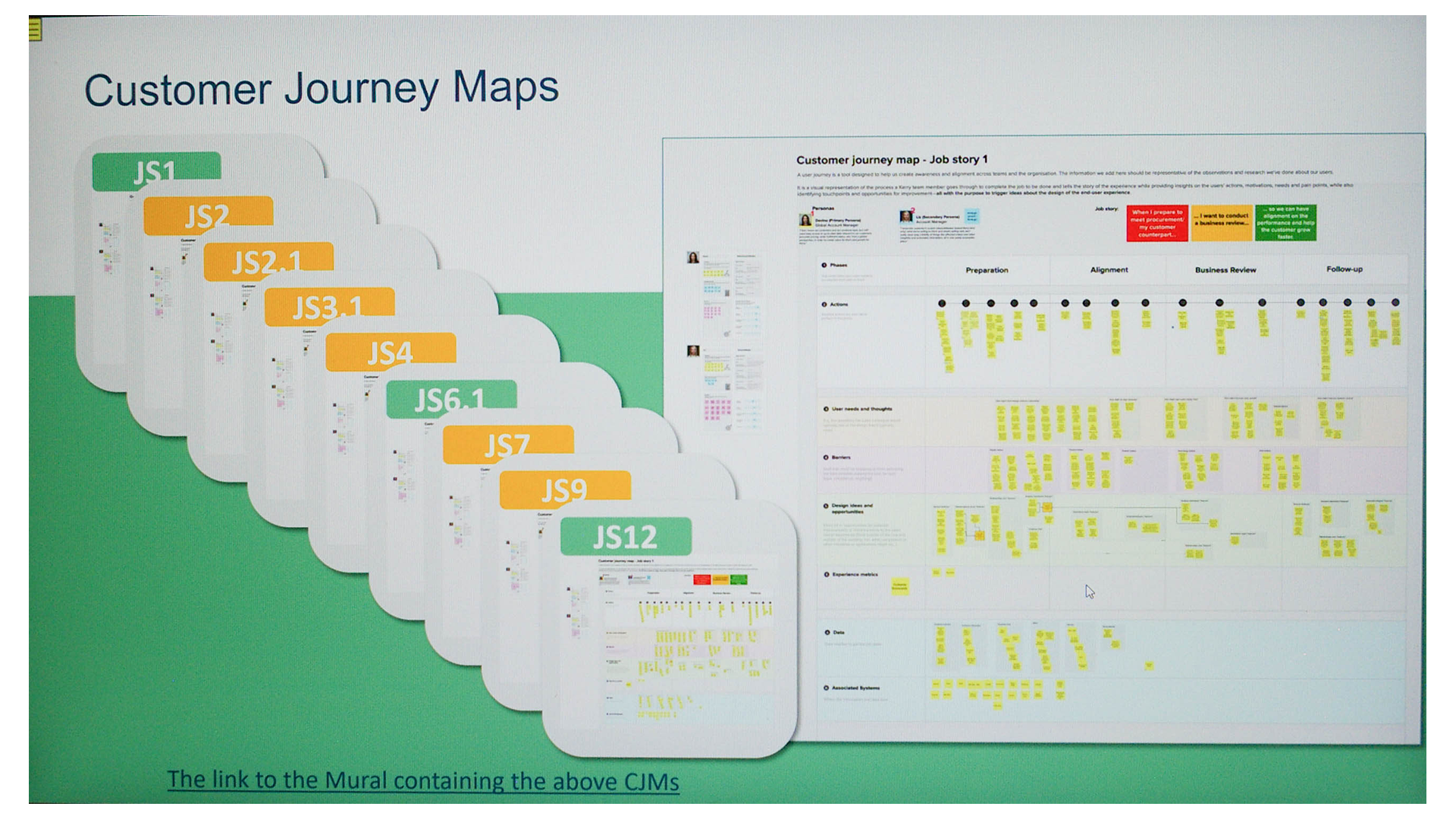
Through a series of in-house workshops, we defined and aligned on a customer journey map with Sales representatives and business stakeholders.
This journey captured five key touchpoints in the customer experience:
- Research & identify required products
- Sample and information requests
- Selling
- Order fulfilment
- Aftercare
With the journey mapped, we aligned the job stories to each stage, creating a clear link between user needs and business objectives.
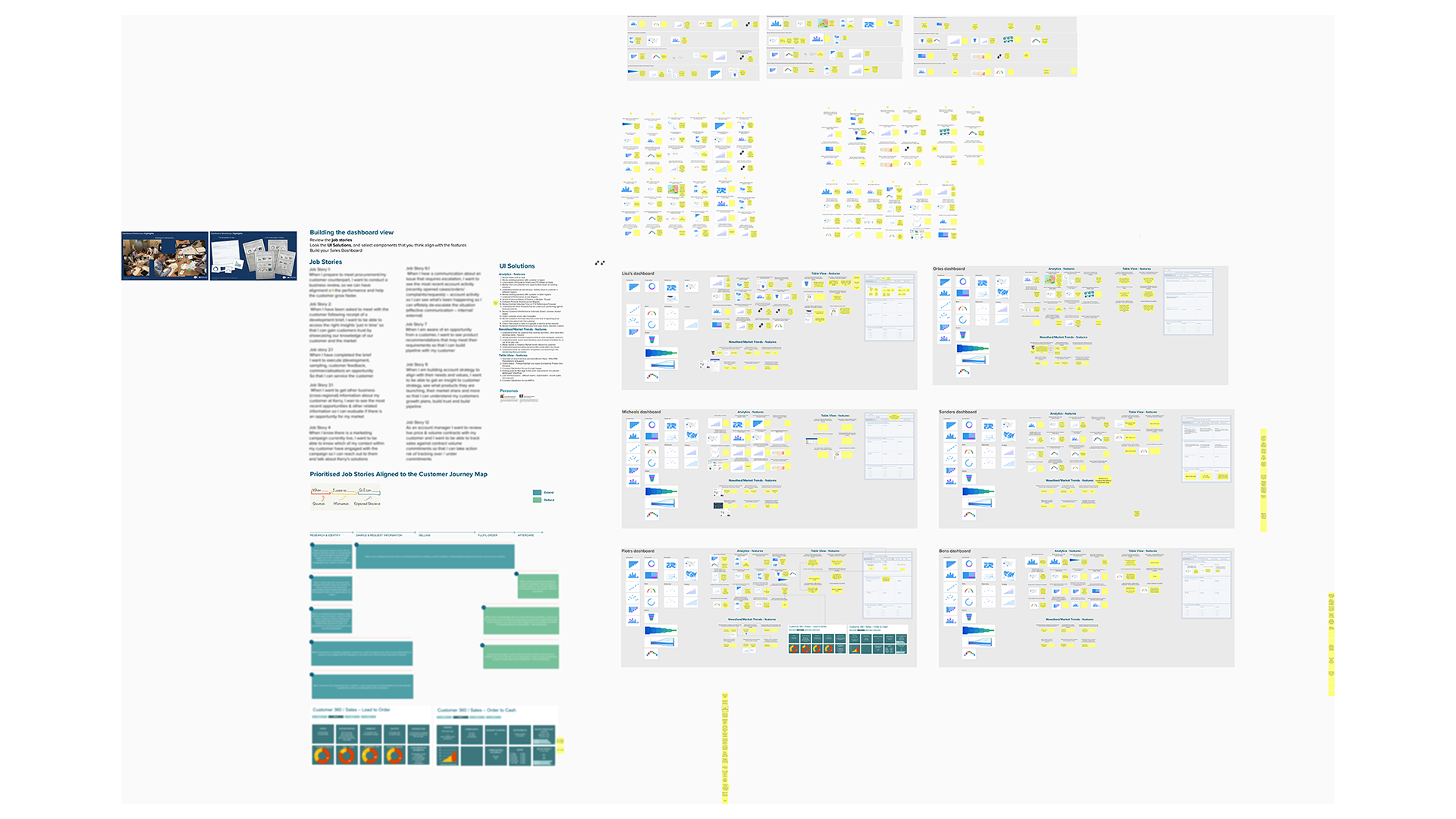
Next, we ran collaborative workshops with Sales employees, SMEs, and business partners to define the product features essential for helping personas successfully complete their job stories. Using Mural, participants were given a set of UI components and asked to “build a dashboard.” These co-creation exercises not only encouraged engagement but also directly informed the wire-framing process.
Customer journey map, job stories
Process – initial wire framing, design evolution
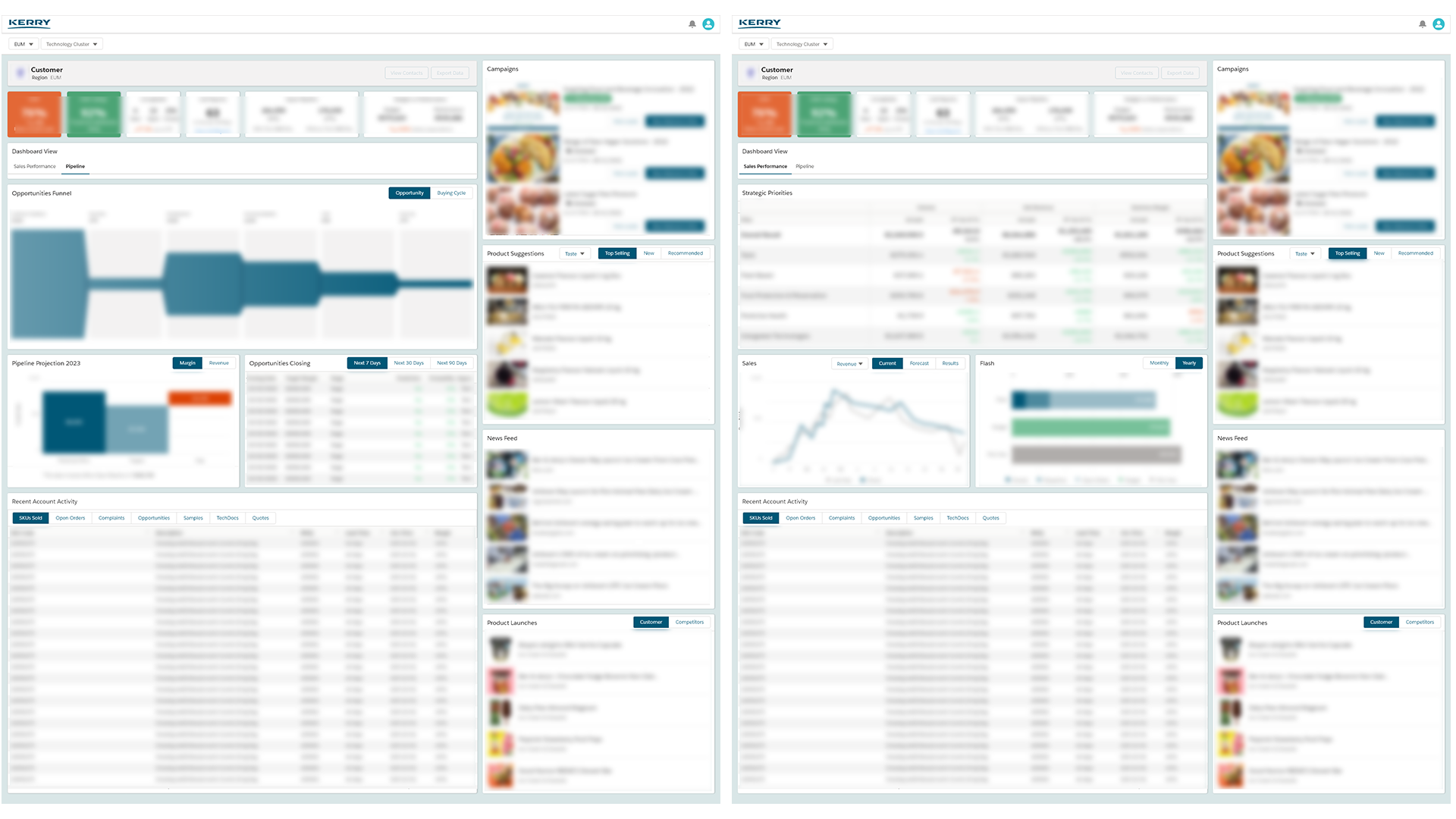
Before moving into wire-framing, we held several whiteboarding sessions to map out how and where key information should surface in order to support the selected job stories. These sessions laid the groundwork for the first set of wireframes, which were then validated with stakeholders and potential users to ensure alignment with real needs and expectations.
Solution development
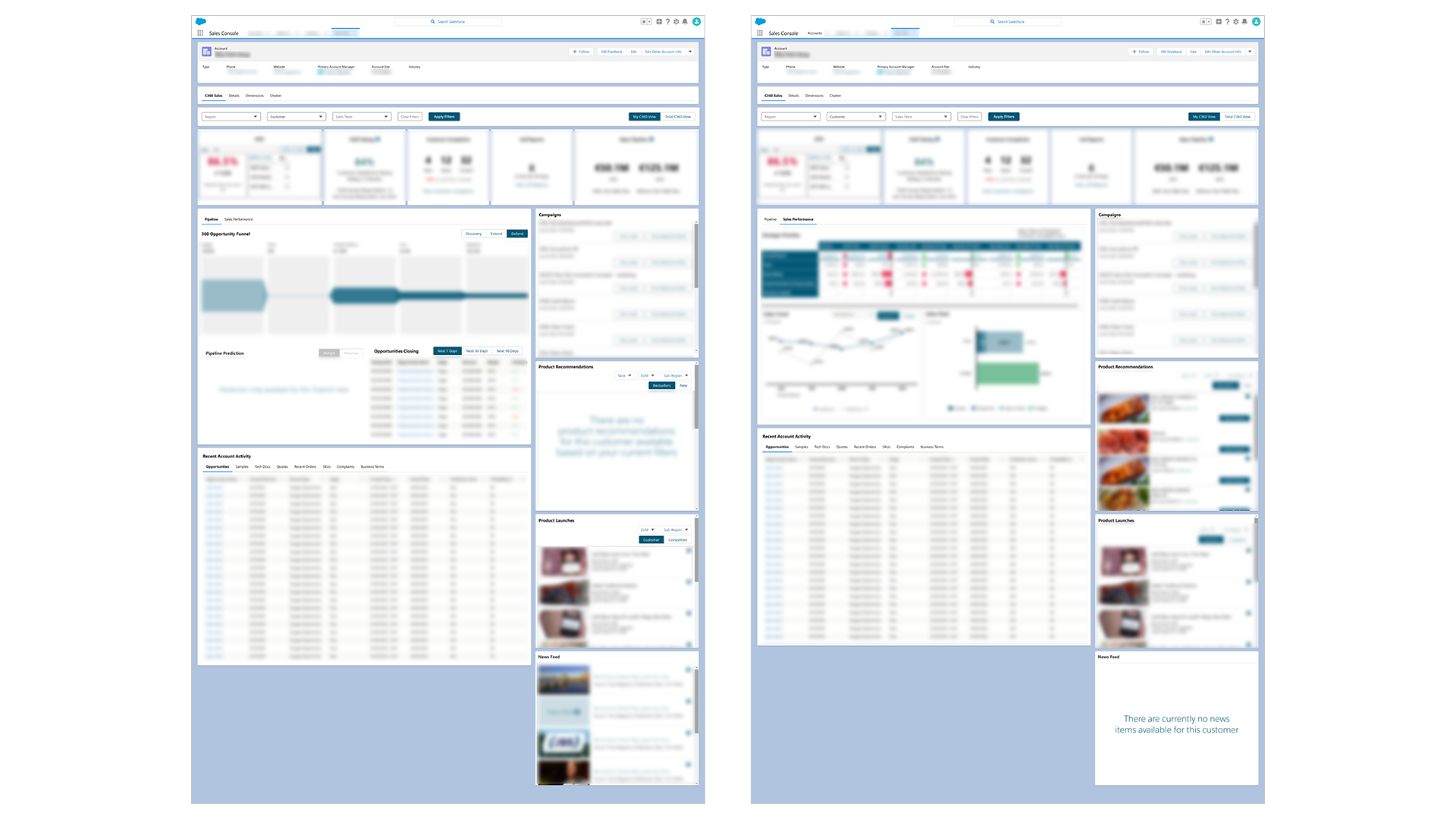
By the end of the 12-week process, we had designed and tested a working Sales dashboard prototype. The initial wireframes were transitioned from Sketch to Figma, enabling smoother collaboration and iteration. Salesforce developers then partnered with the data team to build the dashboard within Salesforce, delivering it as a web-based application. Before releasing the MVP, the solution was thoroughly tested in a sandbox environment to ensure quality and reliability.
Early iterations
Testing and iteration
Initial testing of the Salesforce dashboard was carried out in a sandbox environment, where both functional and user acceptance testing were completed. To validate the MVP with real-world data, a pilot customer account was selected for the final testing phase.
Following the MVP launch in May 2023, development continued with the addition of new features, expanding the dashboard to support the job stories that were not included in the initial release.
Conclusion and final thoughts
After the MVP launch and successful testing with an initial customer, the dashboard was gradually rolled out to additional customer accounts and sales teams. By November 2023, 12 more customer accounts were live.
In March 2024, an external Salesforce team was brought in to conduct a comprehensive functional and UX review. Based on their findings, several dashboard elements were refined to improve performance and resolve usability issues.
By October 2024, the rollout had expanded globally, reaching accounts across APMEA, LATAM, North America, and additional European regions.
Although mobile use was not part of the original design, it later became a key requirement. Development efforts were extended to make the dashboard responsive, with optimised support for selected Apple iPads used by Sales staff and managers.
Application screenshots
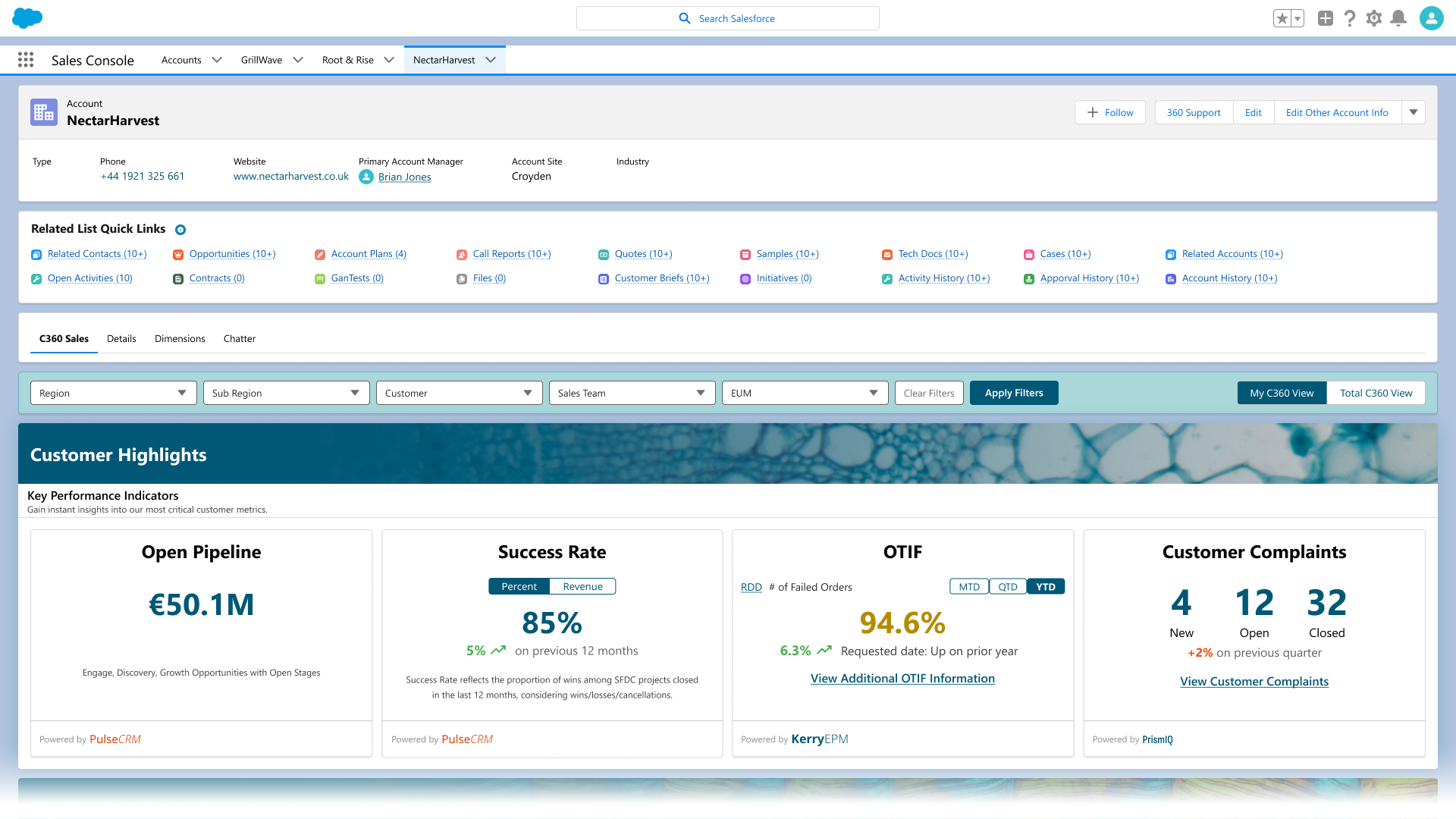
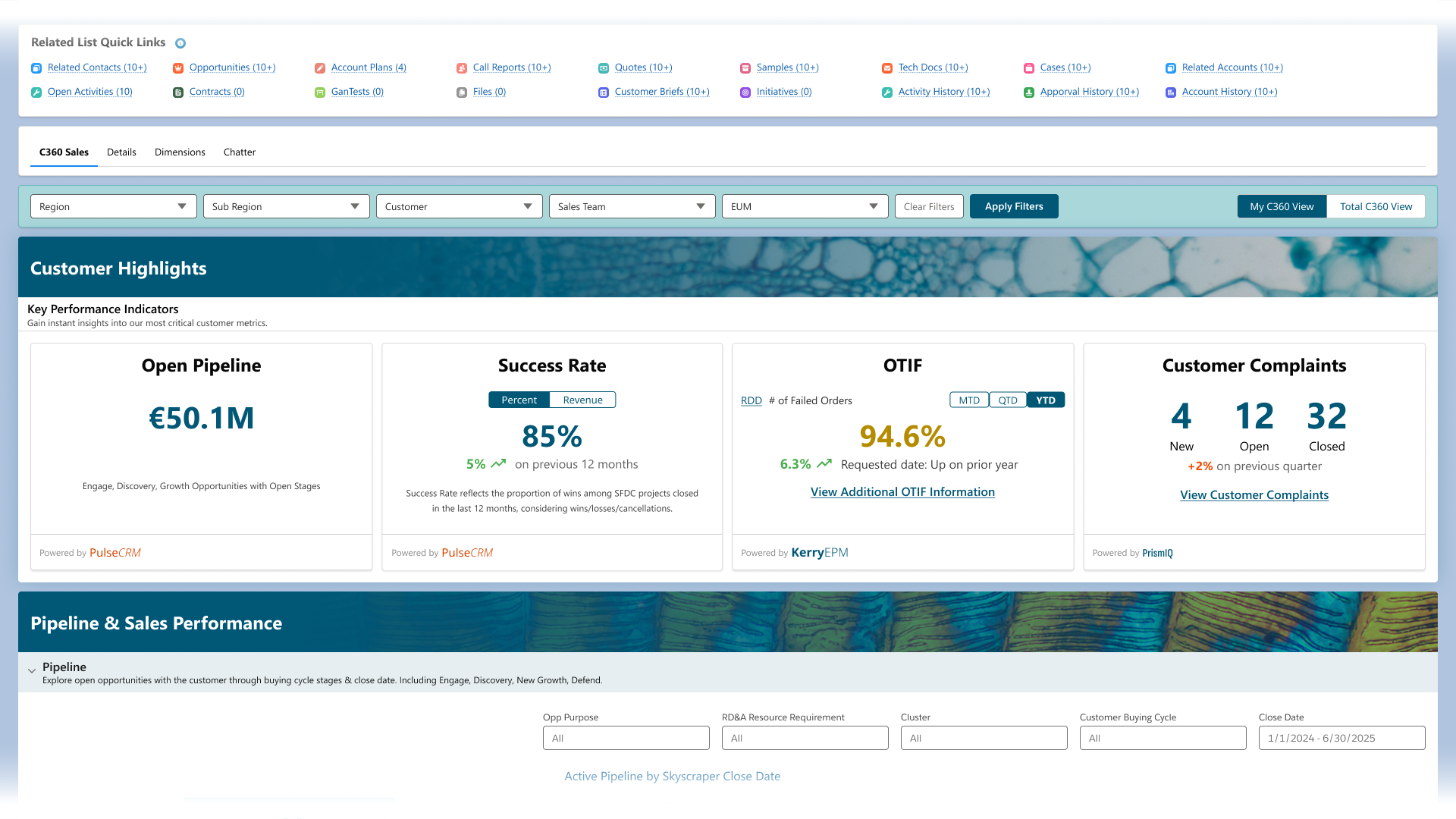
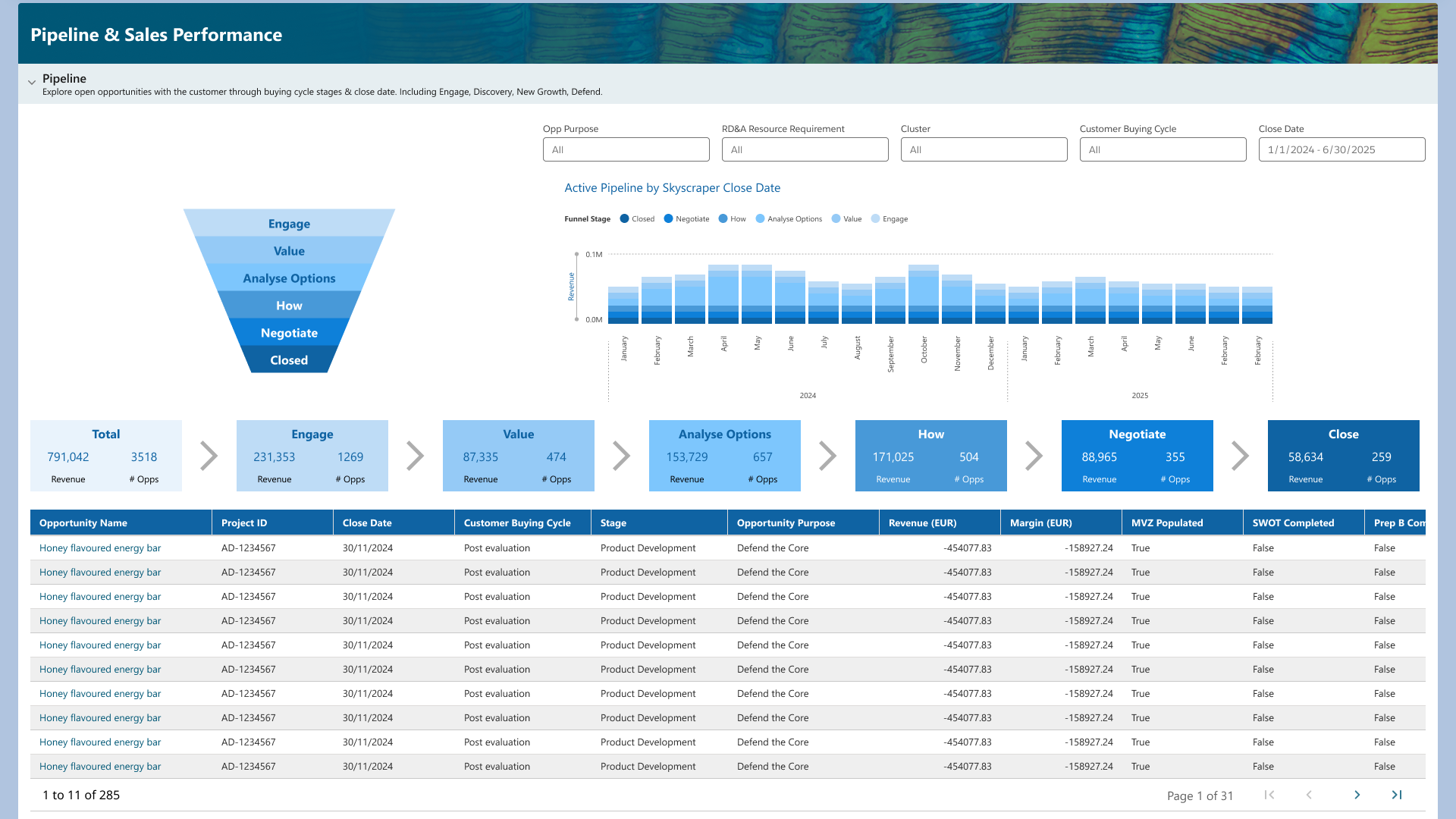
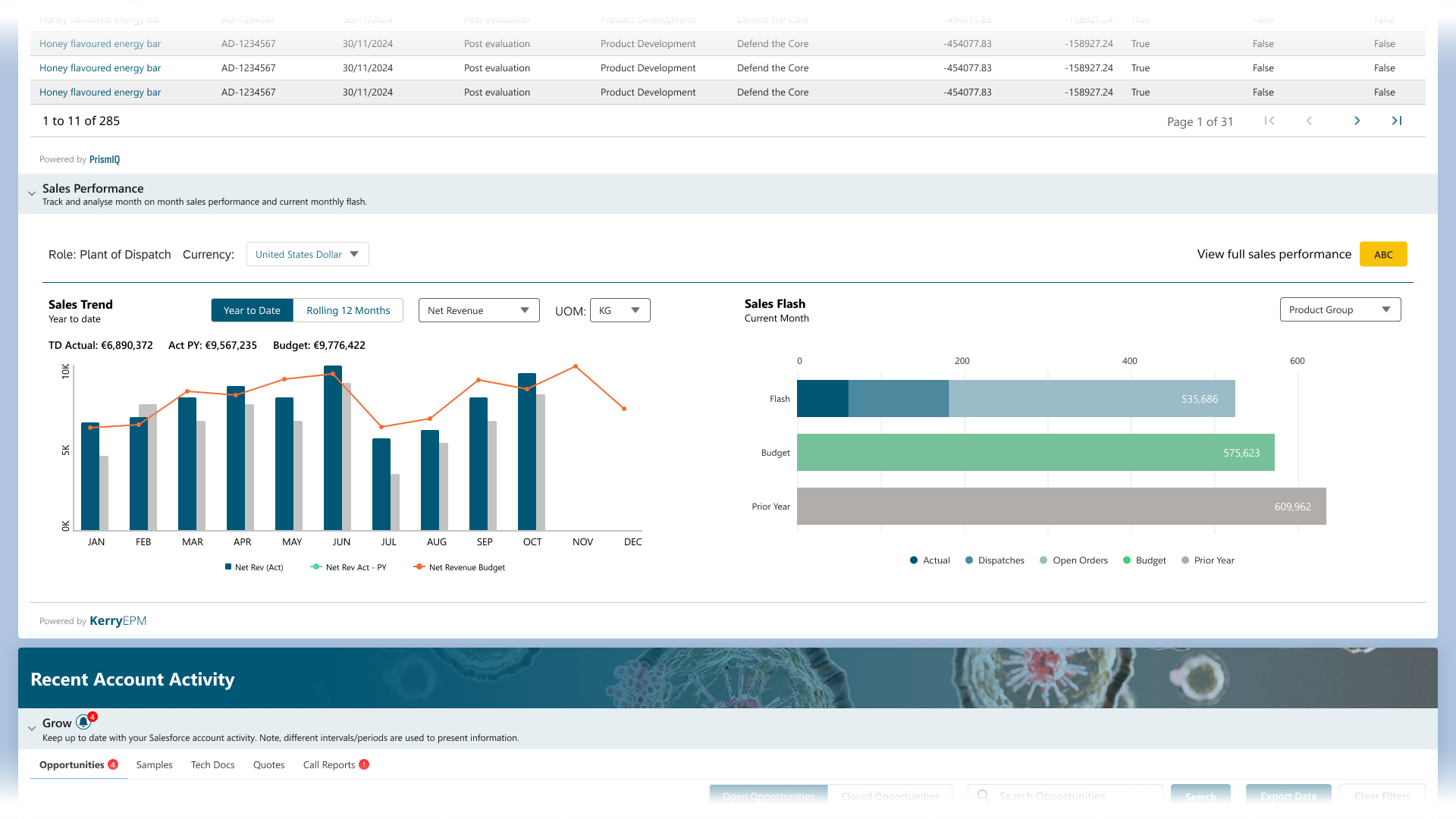
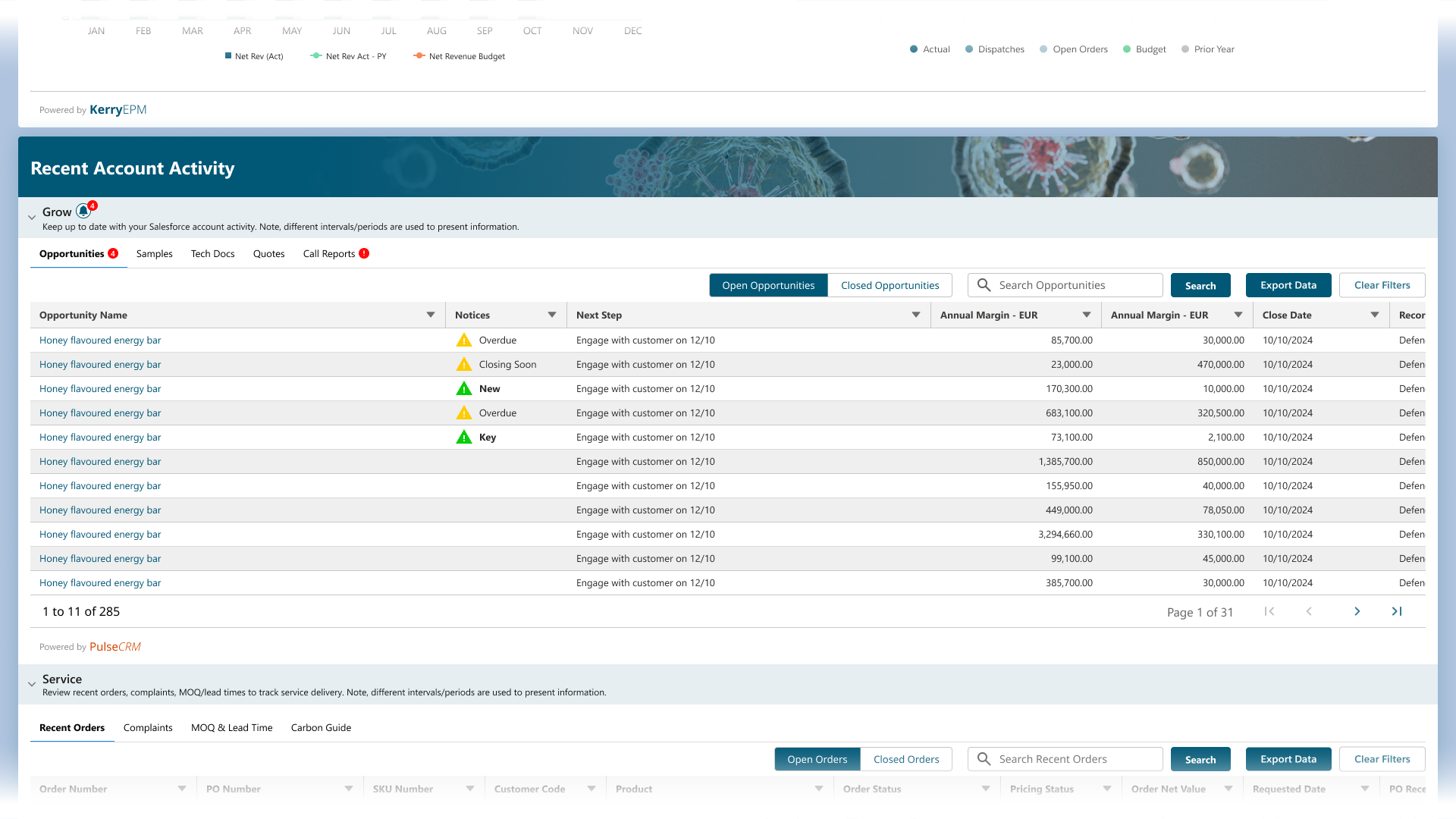
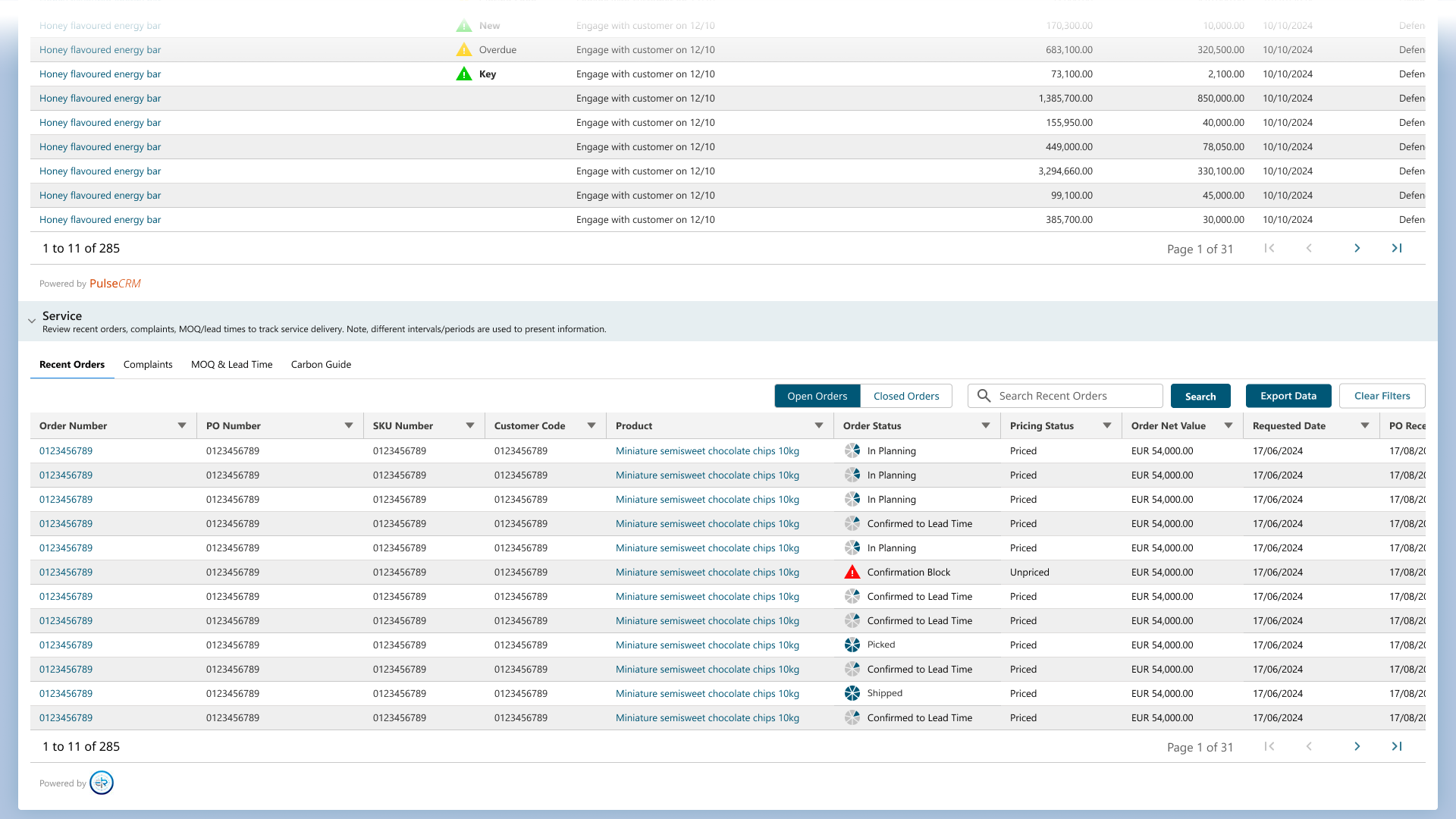
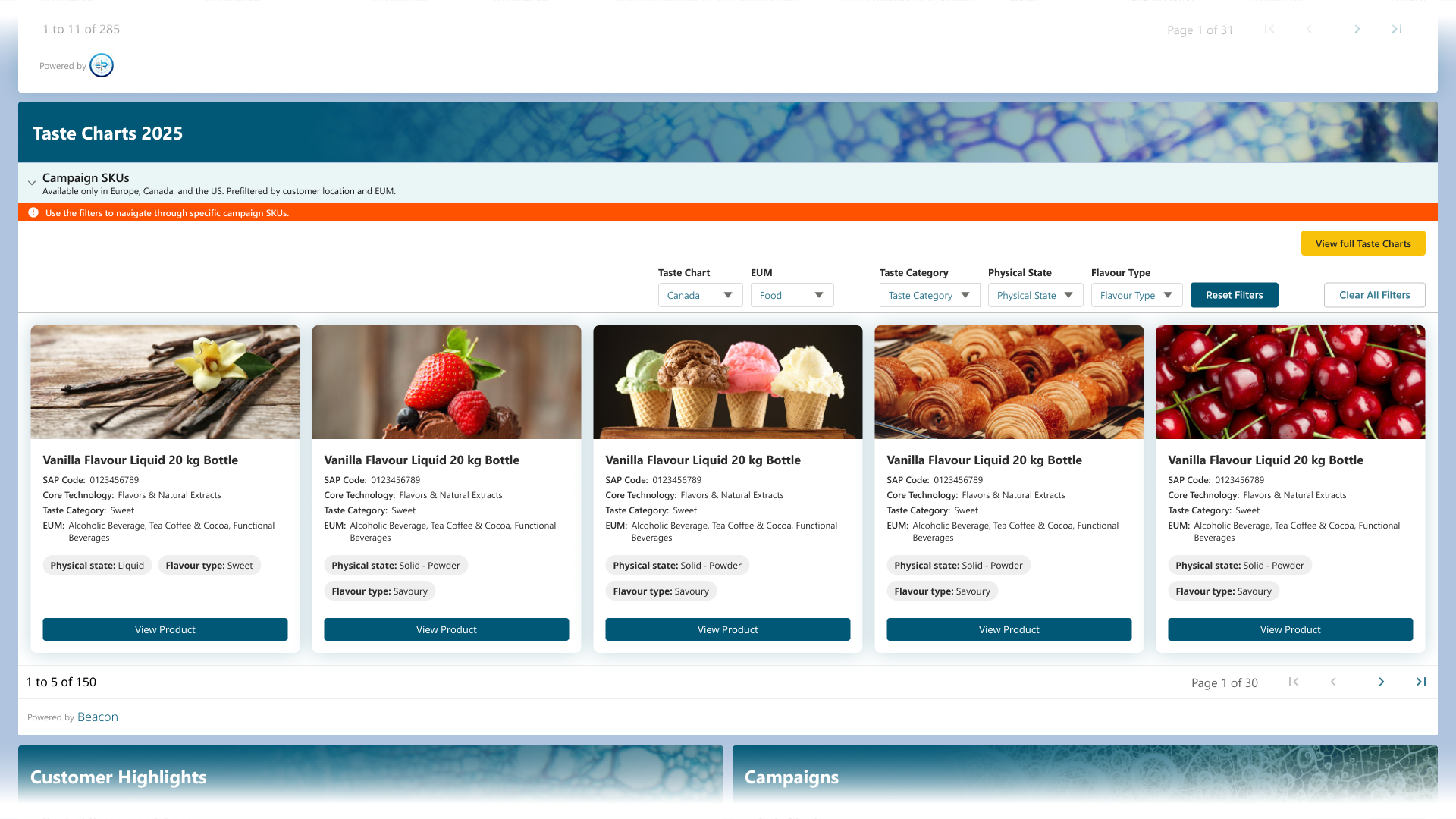
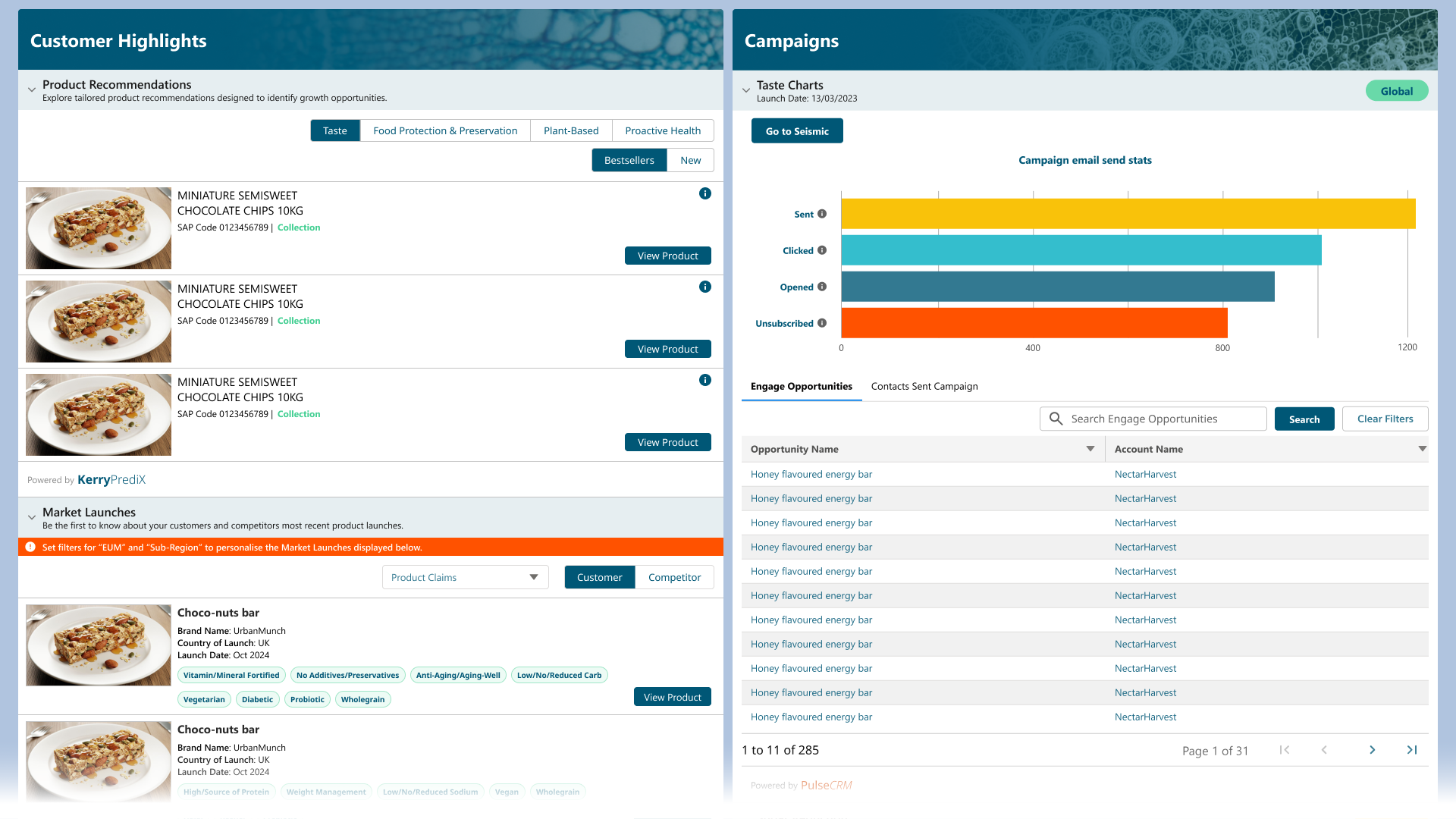
Please note that much of my work with Kerry Group is confidential and many visual examples have been redacted. Many thanks for Kerry Group for allowing me to use these examples.
